
Eco-friendly builders focus on sustainable construction practices by using renewable materials like bamboo and recycled steel. They integrate energy-efficient techniques such as passive solar design and smart technology, enhancing building performance while reducing carbon footprints. Advanced water conservation strategies and adherence to sustainability certifications like LEED further underscore their commitment to eco-friendliness. Through these methods, builders not only uplift indoor air quality but also appeal to the growing consumer demand for environmentally friendly solutions. Explore how these builders create more sustainable communities.
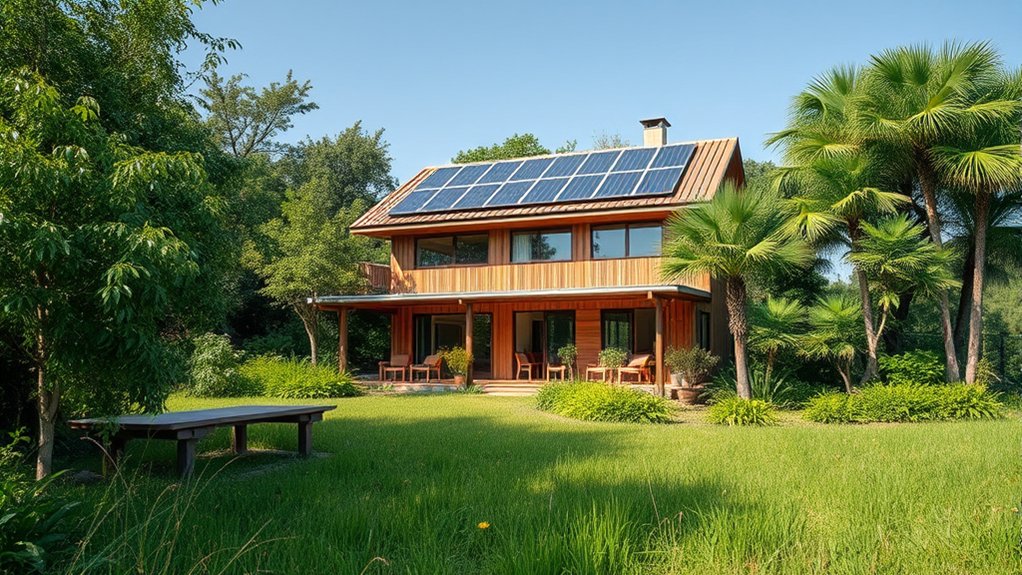
While the construction industry traditionally relied on conventional materials, today’s eco-friendly builders are revolutionizing the field by embracing renewable resources. By prioritizing sustainable materials like reclaimed wood, bamboo, and recycled steel, you’re actively reducing your project’s carbon footprint.
These choices not only lower environmental impact but also conserve natural resources. Opting for low-carbon concrete and locally sourced materials further minimizes waste and cuts down on transportation emissions, enhancing eco-friendly building practices.
Incorporating renewable materials in construction isn’t just about environmental benefits; it’s also about improving indoor air quality. Using low-VOC paints and non-toxic finishes contributes to healthier living spaces.
You’re about to discover how energy-efficient building techniques can transform your projects.
By integrating passive solar design, you can considerably cut down on your reliance on artificial heating and cooling, which not only saves money but also conserves energy.
Pair this with advanced insulation methods, like double-glazed windows and high-quality materials, and you’ll maintain comfortable indoor temperatures while reducing your building’s overall energy footprint. Additionally, incorporating eco-friendly construction methods can further enhance energy efficiency and sustainability in your projects.
Passive solar design stands out as a key technique in energy-efficient building, offering a smart way to harness the sun’s power to reduce energy use. By optimizing a building’s orientation and window placement, you can maximize natural sunlight, cutting down reliance on artificial heating and cooling.
This approach often uses thermal mass materials like concrete or stone to absorb and store solar energy, stabilizing indoor temperatures. With the clever use of overhangs and shading devices, passive solar design minimizes overheating in summer while allowing sunlight in during winter, boosting energy efficiency.
Incorporating advanced insulation methods into your building projects can markedly enhance energy efficiency, reducing both heat transfer and utility costs.
By using materials like spray foam and rigid foam board, you can achieve impressive R-values of 6 to 7 per inch, effectively cutting down on heat transfer. Additionally, integrating recycled materials, such as cellulose from post-consumer paper, not only boosts thermal performance but also aids in waste reduction.
These energy-efficient designs can lead to energy savings of up to 30%, as they minimize air leaks and maintain steady indoor temperatures.
Furthermore, using insulated concrete forms (ICFs) enhances structural integrity and insulation. Implementing these techniques can help you achieve green certifications like LEED or Energy Star, showcasing your commitment to sustainable building practices.
Incorporating advanced water conservation strategies into your building projects can drastically reduce water usage, benefiting both the environment and your bottom line.
By implementing innovative rainwater harvesting systems, you can capture and reuse rainwater, greatly cutting down on fresh water demand.
Pair this with efficient greywater recycling solutions and smart plumbing fixtures like low-flow toilets, and you’ll create spaces that not only conserve water but also promote sustainable living.
While often overlooked, innovative rainwater harvesting systems are transforming how we think about water conservation and sustainability. By capturing rainwater from roofs, you reduce reliance on municipal water supplies, promoting a sustainable home and cutting down on water bills by up to 30%.
These systems help in water conservation by minimizing stormwater runoff, which can decrease flooding and erosion by up to 50%. Using eco-friendly materials, rainwater harvesting systems not only reduce waste but also provide a versatile resource for irrigation, toilet flushing, and laundry.
Integrating these systems guarantees efficient water management and supports environmental health.
As you explore sustainable construction practices, greywater recycling emerges as a powerful tool for advanced water conservation.
These systems can reduce your water consumption by up to 50% by reusing water from sinks, showers, and laundry for irrigation and toilet flushing.
By implementing greywater recycling systems, not only do you contribute to conserving precious fresh water resources, but you also save on water bills—potentially cutting costs by $200 to $400 annually.
Advanced technologies, including treatment and filtration, guarantee that the water meets safety standards for non-potable uses, safeguarding public health.
Furthermore, installing greywater systems can help achieve water efficiency certifications like LEED, bolstering your building’s sustainability credentials and demonstrating a commitment to responsible water management.
Smart plumbing fixture integration stands out as a pivotal strategy in advanced water conservation, offering a blend of innovation and practicality in sustainable construction.
By adopting smart plumbing fixtures, such as low-flow toilets and faucets, you can reduce water usage by up to 30%, benefiting both the environment and your wallet.
Incorporating real-time monitoring through advanced sensor technology, these systems help you detect leaks and inefficiencies, preventing potential costly damages.
Dual-flush toilets provide tailored water use, while faucet aerators maintain pressure but cut water flow by 30%.
Incorporating smart technology into construction isn’t just about innovation; it’s an essential strategy for enhancing energy efficiency and sustainability.
By utilizing sensors and automated controls, you can optimize energy usage, greatly lowering operational costs. Smart technology enables real-time monitoring of energy consumption, allowing you to make proactive adjustments that boost efficiency.
For instance, occupancy sensors can detect when areas are unoccupied, automatically turning off lights or adjusting HVAC settings. This results in substantial energy savings. Smart thermostats learn usage patterns, enhancing comfort and contributing to energy efficiency.
Additionally, integrating smart technologies helps manage renewable energy sources effectively, improving the sustainability of projects.
Embrace these technologies in your construction practices to build smarter, more sustainable structures that benefit both the environment and your bottom line.

While smart technology redefines energy efficiency in construction, low-impact methods take sustainability a step further by minimizing the environmental footprint of building practices.
You can implement low-impact construction methods by focusing on designs that generate less waste and using sustainable practices. These methods preserve natural ecosystems and maintain biodiversity, minimizing the ecological impact of new developments.
By utilizing recycled materials, you reduce resource consumption and material waste, contributing to a more sustainable environment. Additionally, incorporating ADU construction and design can enhance the sustainability of living spaces.
Here are key aspects to contemplate:
These approaches guarantee your building projects are both environmentally friendly and efficient.
To create a healthier indoor environment, focusing on eco-friendly practices is vital for enhancing air quality. Start by using non-toxic building materials like formaldehyde-free insulation and sustainable flooring options. These choices minimize exposure to harmful chemicals, boosting your indoor air quality.
Low-VOC paints and finishes are another sustainable option, reducing emissions and promoting a healthier atmosphere.
Effective ventilation systems are important, as they enhance air circulation, reduce moisture, and remove pollutants, all while keeping temperatures comfortable. Incorporating air purification technologies such as HEPA filters and UV light systems can further eliminate airborne contaminants and allergens.
Don’t forget regular maintenance of your HVAC systems, including filter changes and duct cleaning, to guarantee peak performance and continuous improvement of your indoor air quality.
Creating a healthier indoor environment naturally leads to the pursuit of sustainability certifications and standards. Achieving certifications like LEED, BREEAM, and WELL means hitting benchmarks for energy efficiency and eco-friendly practices.
These programs push for sustainable materials and reduced environmental impact, making your projects stand out. You’ll need to document and verify your eco-friendly practices, boosting your credibility in a green economy. Plus, compliance leads to long-term savings through lower energy and waste costs.
Embrace these standards to show your commitment to sustainability.
In sustainable construction, you can make a significant impact by embracing eco-friendly practices. By using renewable materials and energy-efficient techniques, builders reduce their carbon footprint. Did you know buildings account for nearly 40% of global energy consumption? With smart technology integration and advanced water conservation, you’ll optimize resource use. Low-impact construction methods and enhanced indoor air quality further solidify your commitment to sustainability, helping you meet certifications and set new standards in the industry.
Skip to content